There's no single speaker size that's right for every boat. Which one makes sense for you depends on your boat's size, where you're mounting speakers, how much low-end you want, and what your existing cutouts and wiring will support. That said, marine speakers generally follow a predictable pattern as size increases: more cone area, more potential output, and typically more low-frequency response, but also a bigger mounting footprint and often a higher price. Two things matter most when comparing sizes: understanding what size actually changes about performance and knowing what your boat can physically accommodate. They're related, but they're not the same thing, and understanding the difference will save you from buying a size that won't fit or won't satisfy.
Why Speaker Size Matters More on Boats Than in Cars
Boat audio and car audio face different size constraints. Inside a car, speaker locations are largely fixed by the factory, so size is often decided for you. A boat doesn't offer any of that in the same way. Many boats have more flexibility in speaker placement, but also more variation in mounting surface thickness, available depth, and existing cutouts from a previous system.
Existing infrastructure adds to the challenge. Replacing speakers in a boat that already has cutouts generally means matching or adapting to that existing size, while a new install gives you more freedom to choose based on performance goals rather than what will fit an existing hole.
What Does Speaker Size Actually Change About Sound?
Speaker size affects how much cone area is available to move air, which generally influences low-frequency response and how much output the speaker can produce without a separate subwoofer. A larger cone can typically move more air at lower frequencies than a smaller one, all else being equal.
Size isn't the only factor in how a speaker sounds, though. Sensitivity, RMS power handling, and enclosure design all play a role too. A well-designed smaller speaker can outperform a poorly designed larger one, so size is one part of the picture, not a standalone predictor of sound quality.
What Is a 6.5-Inch Marine Speaker Best Suited For?
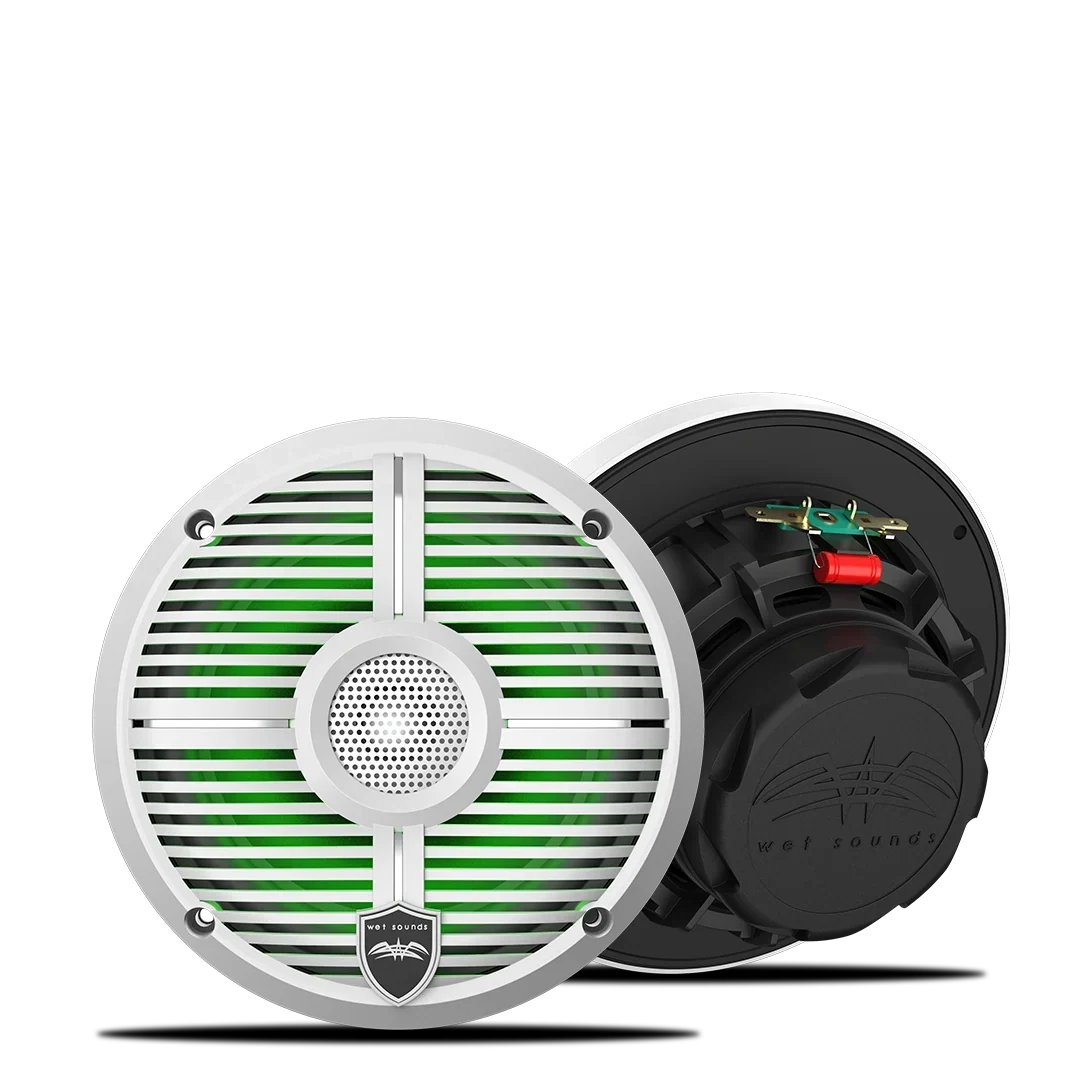
A 6.5-inch marine speaker is one of the most common sizes on boats, largely because it fits a wide range of factory cutouts and mounting locations. It tends to suit boats where space is limited or where speakers are being added in multiple zones rather than concentrated in one area.
Because of its smaller cone area, a 6.5-inch speaker generally has less low-frequency output on its own compared to larger sizes, which is part of why many boat owners pair 6.5-inch speakers with a separate subwoofer if strong bass response matters to them.
Marine Speaker Sizes: What's the Difference?
6.5-Inch What it tells you: A compact size that fits most common mounting locations Why it matters: Flexible for multi-zone systems, but generally less low-end on its own
8-Inch What it tells you: A mid-size option with more cone area than 6.5-inch Why it matters: A middle ground for output and low-end without needing a subwoofer
10-Inch What it tells you: The largest common marine speaker size Why it matters: More potential output and low-end, but a larger mounting footprint
Mounting Depth and Cutout What it tells you: The physical space available for a given speaker size Why it matters: Determines which sizes are actually installable on your boat
Size, output, and mounting space should be considered together rather than picking the biggest option available. A speaker that doesn't physically fit isn't a better choice just because it's larger.
Why 8-Inch Speakers Are a Common Middle Ground
8-inch speakers tend to earn their keep on boats where 6.5-inch speakers don't quite deliver enough low-end, but a 10-inch speaker won't fit the available space or budget. The larger cone area compared to a 6.5-inch speaker generally means more output and fuller sound without moving all the way up to the largest common size.
That doesn't mean 8-inch is automatically the right choice for every boat. Size is one factor among several, and the right choice depends on your boat's mounting locations, your existing wiring, and how much low-end you're trying to achieve. A well-matched 6.5-inch system paired with a subwoofer can outperform a mismatched 8-inch setup.
How Big Should Your Boat's Speakers Be?
The honest answer is that your speakers should be as large as your mounting locations and system goals genuinely support, without forcing a size that strains your available space just to chase bigger numbers.
What that looks like in practice depends on a handful of variables: your boat's existing cutouts, how many speakers and zones you're running, whether you're adding a subwoofer, your boat's size, and how much low-end response matters to you personally. A system sized to fit your boat's actual mounting locations will generally perform more reliably than one where a larger speaker was forced into a space it barely fits. There isn't a single correct size that applies to every boat; the goal is a size that matches both your space and your listening goals.
How Speaker Size and Amplifier Power Work Together
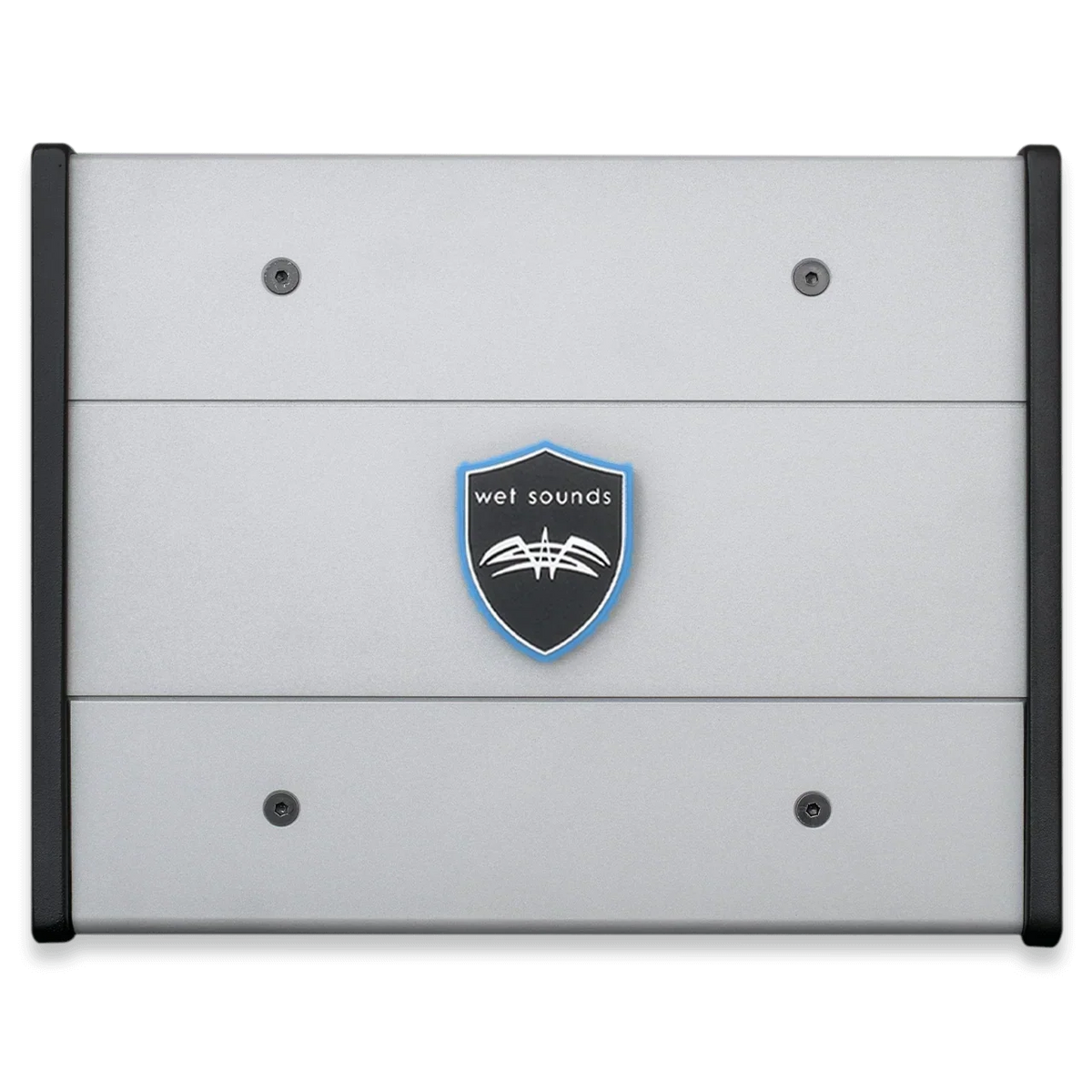
Speaker size and amplifier power are two sides of the same equation. A larger speaker with higher RMS power handling generally needs more amplifier power to reach its full potential than a smaller speaker with a lower RMS rating.
As an illustrative example only: upgrading from 6.5-inch to 10-inch speakers without also reconsidering amplifier output may not deliver the improvement you'd expect, since the larger speaker may be underpowered relative to what it's built to handle. That's not a guarantee of performance for any specific setup, just a general illustration of how the relationship works.
How to Choose the Right Marine Speaker Size for Your Boat
A well-matched sizing decision usually comes down to weighing these factors together rather than optimizing for just one:
- Available mounting depth and cutout size
- Existing wiring and cutouts, if replacing speakers
- How much low-end response you want without a subwoofer
- Boat size and number of speaker zones
- Amplifier power available to drive larger speakers
- Whether you're planning to add a subwoofer separately
- Budget, since larger speakers are often more expensive
- Speaker placement and how visible size will be
- Weight and mounting surface strength
- Long-term plans for the system beyond the initial install
None of these factors works in isolation. The best speaker size is the one where mounting space, power, and your listening goals are all pulling in the same direction for your specific boat.
Why Mixing Speaker Sizes Can Sometimes Make Sense
Choosing a speaker size isn't always an all-or-nothing decision. Some boats use a mix, with smaller speakers in tighter zones and larger speakers where space allows, rather than forcing one size everywhere.
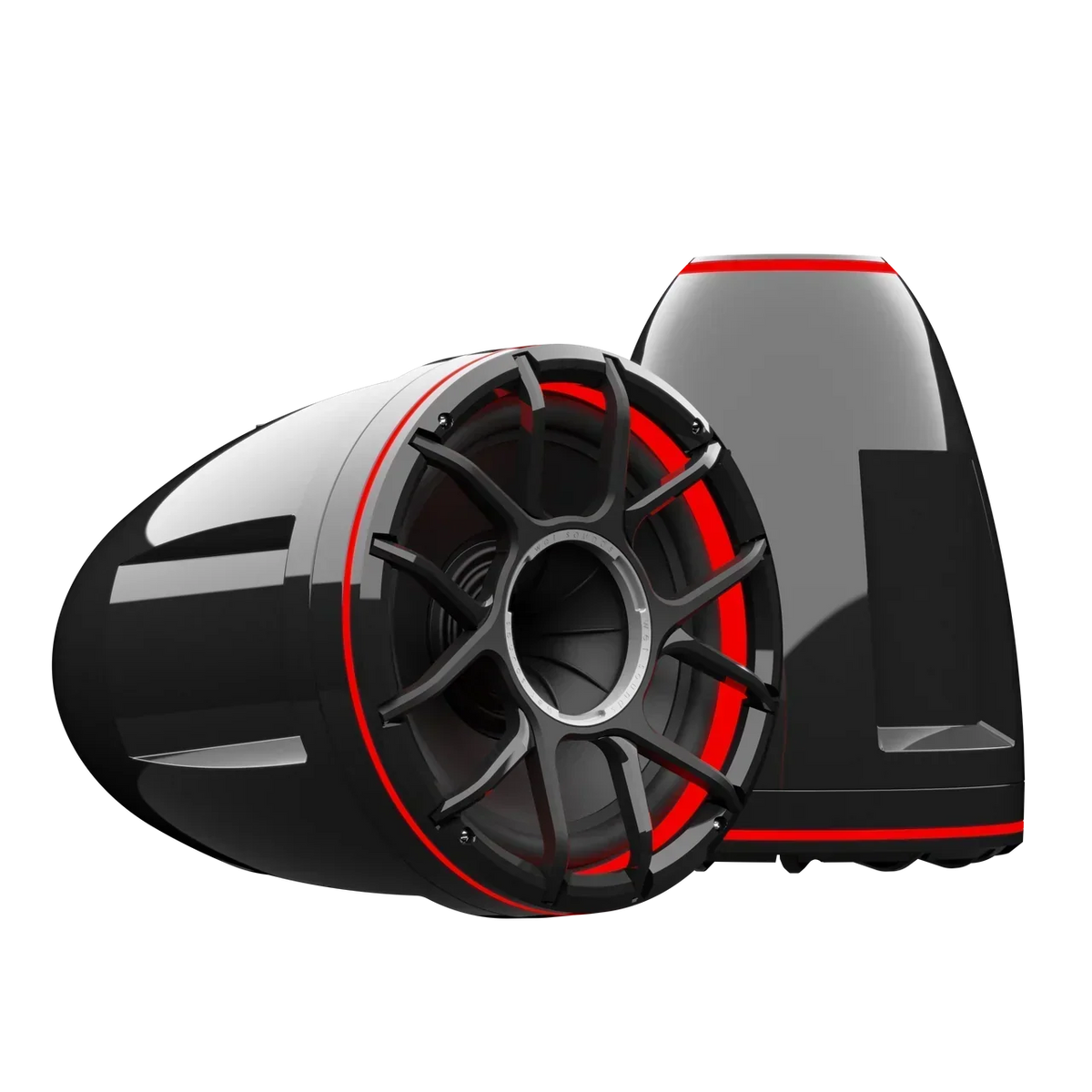
This matters for boats with varied mounting locations, since a single size that fits the helm may not fit a cockpit gunwale or a tower mount. A system that matches size to what each location can actually support often performs more consistently than one built around uniform sizing alone.
Common Mistakes When Choosing Marine Speaker Size
A few mistakes show up often enough to call out directly:
- Assuming bigger always sounds better. Sensitivity, power handling, and amplifier matching affect sound just as much as raw size.
- Forcing a larger speaker into a space that barely fits. A cramped install can affect both performance and long-term durability.
- Ignoring existing cutouts when replacing speakers. Adapting to a smaller cutout usually costs less than modifying mounting surfaces.
- Upgrading speaker size without reconsidering amplifier power. A larger speaker may be underpowered by an amplifier sized for the old system.
- Overlooking mounting surface strength. Larger, heavier speakers need adequately supported mounting locations.
- Assuming one size fits every zone on the boat. Different mounting locations sometimes call for different sizes.
A Simple Checklist for Choosing Marine Speaker Size
- Measure available mounting depth and cutout size
- Check existing cutouts if replacing speakers
- Decide how much low-end you want without a subwoofer
- Confirm amplifier power can support the size you choose
- Consider whether a subwoofer fits your plans
- Check mounting surface strength for larger speakers
- Think about whether mixed sizes make sense for your boat
- Set a realistic budget for the size you want
- Confirm speaker placement fits your boat's layout
- Plan for future system changes before finalizing size
Marine Speaker Sizes: The Bottom Line
There's no universal speaker size that fits every boat. The right choice comes down to mounting space, amplifier power, low-end goals, and how the system fits your boat's specific layout, all working together.
Larger speakers can genuinely deliver more output and low-end, but size alone doesn't guarantee better sound. It needs to be matched to your mounting space and amplifier, not chosen based on the biggest number available.
Final Summary: Choosing Between 6.5-Inch, 8-Inch, and 10-Inch Speakers
Figuring out the right marine speaker size isn't about defaulting to the largest option you can find. A few things matter more:
- Mounting space: Determines which sizes are physically installable on your boat.
- Low-end goals: Larger speakers generally offer more low-frequency output on their own.
- Amplifier power: Needs to scale with speaker size to reach full potential.
- Existing cutouts: Matter significantly if you're replacing rather than newly installing.
- System goals: A subwoofer can reduce how much low-end your main speakers need to provide.
The goal isn't the largest speaker that will physically fit. It's a size that matches your boat's space, power, and listening goals together.
Find the Right Speaker Size With Wet Sounds
Getting speaker size right comes down to matching mounting space, amplifier power, and listening goals, not just picking the biggest option available, and that's the approach we take with our marine audio solutions. We build our systems for boat owners who want sound that's properly matched to their boat, not just maximized on paper.
If you're ready to choose the right speaker size for your boat, we invite you to explore our marine speakers and find the setup that fits how you spend time on the water.
Frequently Asked Questions
Are bigger marine speakers always better?
Not necessarily. Larger speakers generally offer more cone area and low-end potential, but sensitivity, power handling, and amplifier matching all affect sound quality too. A well-matched smaller speaker can outperform a mismatched larger one.
What size marine speaker is best for a small boat?
6.5-inch speakers are a common choice for smaller boats or tighter mounting locations, since they fit a wide range of cutouts while still delivering solid performance, especially when paired with a subwoofer for added low-end.
Do I need a bigger amplifier if I upgrade to larger speakers?
Often, yes. Larger speakers typically have higher RMS power handling, so an amplifier sized for smaller speakers may not fully power them. It's worth reconsidering amplifier output alongside a speaker size upgrade.
Can I mix different speaker sizes on the same boat?
Yes, mixing sizes across different zones is common, especially when mounting space varies by location. A system that matches size to what each spot can support often performs more consistently than forcing one uniform size.
Do I need a subwoofer if I choose 10-inch speakers?
Not necessarily. Larger speakers generally provide more low-end on their own, which can reduce or eliminate the need for a separate subwoofer, though it still depends on your specific low-end goals and listening preferences.